Wednesday, March 29, 2023

Online Growth of Christian Schools

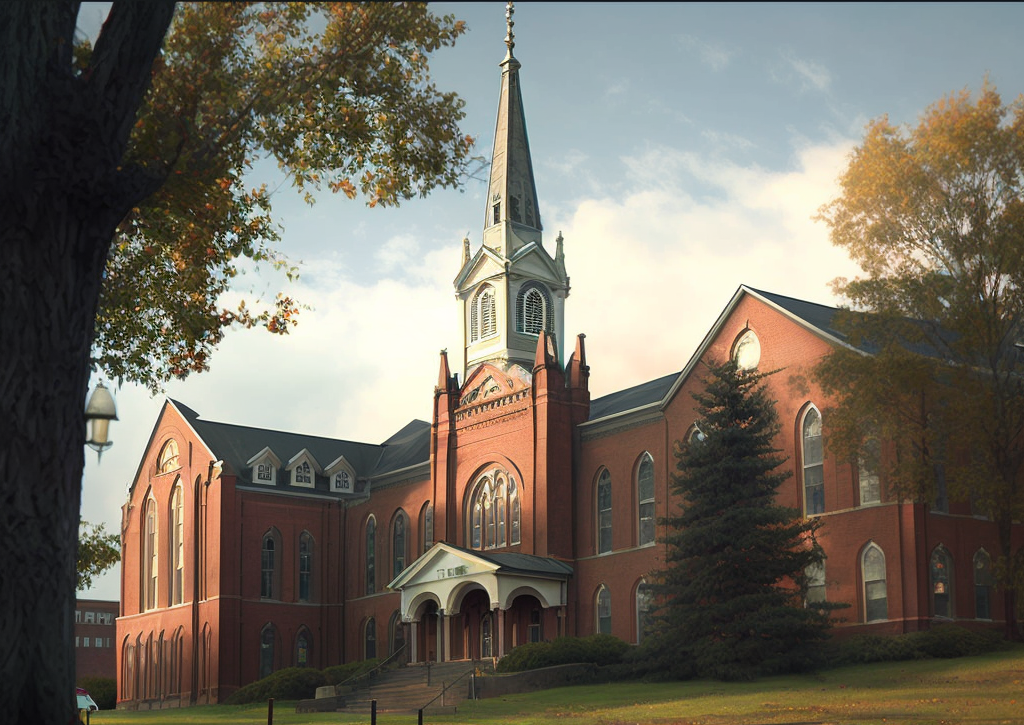
Christian schools are reporting substantial enrollment growth, and many are crediting the expansion of online options for this success. With enrollment numbers playing a crucial role in the financial stability of colleges, the adoption of online learning has become increasingly important in maintaining student numbers.

Abilene Christian University, affiliated with the Churches of Christ, has seen five consecutive years of enrollment growth, with almost one-third of its nearly 6,000 students now attending online. Northwestern College, a Dutch Reformed school in Iowa, reports that 30 percent of its 1,700 students are online. Indiana Wesleyan University, an early adopter of online education, reports that three times more students are logging on to class remotely than visiting the school’s 11 in-person locations.

While the pandemic has certainly accelerated the adoption of online learning, this trend was already well underway before COVID-19 hit. In fact, many higher-education experts predict that colleges will face a “demographic cliff” in 2025 and beyond, as the pool of potential college students shrinks due to declining birthrates. With fewer traditional students entering college, schools must adapt to changing needs and preferences, including the growing demand for online learning.

One of the key advantages of online programs is that they cater to a wide range of students, including nontraditional learners. These may be individuals seeking a bachelor’s degree later in life or pursuing a graduate degree while balancing work and family responsibilities. By offering online options, Christian schools can tap into this market and expand their reach beyond traditional college-age students.

Additionally, online learning has the potential to lower costs for both students and schools. Online programs can be more affordable than in-person options, which can help to attract price-sensitive students who may not have considered attending college otherwise. For schools, online programs can also help to reduce overhead costs associated with physical classrooms and facilities.

Of course, there are also challenges associated with online learning, such as ensuring that students have access to the technology and resources they need to succeed. However, the benefits of online learning are clear, and Christian schools are increasingly recognizing the value of expanding their online offerings.

Overall, the growth of online learning at Christian schools is an exciting trend that has the potential to transform higher education. By embracing new models of learning and catering to the needs of nontraditional students, these schools can continue to thrive in an increasingly competitive landscape.

Wednesday, March 22, 2023

Seminaries in the United States Are Struggling

The struggles of American seminaries have become increasingly apparent over the past few years. While the obvious reason for their decline is that America is now a post-Christian nation, there are other factors that contribute to this trend.

One of the most significant challenges facing American seminaries today is the high cost of education. The average cost of a seminary degree ranges between $45,000 and $55,000. This prohibitive price tag is especially problematic as students often leave their undergraduate programs with a considerable amount of student debt.

Another factor contributing to the decline of American seminaries is the changing nature of ministry. In the past, ministry often meant serving as a pastor or missionary. However, today's ministry landscape is much broader, encompassing a range of roles that do not require a seminary degree. For example, many churches now hire worship leaders, children's ministers, and administrative staff who do not have formal theological training.

Moreover, many churches are now placing a greater emphasis on practical experience rather than formal education. While seminary degrees provide an excellent foundation for ministry, they may not always prepare graduates for the real-world challenges they will face in their roles. As such, churches are looking for candidates with hands-on experience and a track record of success in ministry.

Despite these challenges, there is still a need for seminary education in today's world. While the demand for traditional pastoral roles may be declining, there is still a need for theological training for those who feel called to serve in ministry in a range of capacities. Seminary education can provide a robust theological foundation, as well as opportunities for networking, mentorship, and spiritual formation.

In conclusion, American seminaries are struggling for various reasons, including the high cost of education and the changing nature of ministry. While these challenges are significant, there is still a need for seminary education in today's world. By adapting to the changing needs of the church and providing practical, hands-on training, seminaries can continue to serve a vital role in preparing the next generation of religious leaders.

Thursday, March 16, 2023

Hospital Chaplains

Professional chaplains play a critical role in the healthcare system, particularly in hospital settings. As trained spiritual care providers, chaplains are often the ones who provide emotional and spiritual support to patients, families, and healthcare staff during difficult times. They bring a unique perspective to the healthcare team, helping patients and their loved ones navigate through the challenging experiences that come with illness, injury, and death.

In this blog post, we will discuss the role and importance of professional chaplains in hospital settings, exploring their duties, training, and the benefits they offer to patients, families, and the healthcare team.
What is a Professional Chaplain?

A professional chaplain is a trained spiritual care provider who works in a variety of settings, including hospitals, hospice centers, long-term care facilities, and prisons. They offer emotional and spiritual support to people of all faiths and no faith at all. Chaplains often work as part of the healthcare team and collaborate with doctors, nurses, and other healthcare providers to ensure that patients receive holistic care.

The Role of Professional Chaplains in Hospitals

The role of professional chaplains in hospital settings is multifaceted. Some of the key duties of a hospital chaplain include:
  1. Providing emotional and spiritual support: Chaplains provide emotional and spiritual support to patients, families, and healthcare staff during times of crisis, such as serious illness, injury, or death. They are trained to listen to patients and their loved ones, offer empathy, and provide comfort.
  2. Facilitating religious rituals: Chaplains facilitate religious rituals, such as prayer, sacraments, and blessings, for patients and their families who request them. They can also provide spiritual resources, such as religious texts or meditation materials.
  3. Addressing ethical concerns: Chaplains can help patients, families, and healthcare staff navigate difficult ethical issues, such as end-of-life care, organ donation, and medical decision-making. They can provide guidance on religious or spiritual perspectives on these issues.
  4. Advocating for patient rights: Chaplains can serve as advocates for patients, particularly those who are vulnerable or marginalized. They can help patients and their families understand their rights and ensure that they are treated with dignity and respect.
Training and Qualifications

Professional chaplains undergo extensive training and education to prepare them for their roles in healthcare settings. Typically, chaplains have a master’s degree in divinity or a related field and complete a clinical pastoral education (CPE) program. CPE is an intensive training program that combines classroom learning with hands-on experience providing spiritual care to patients and their families. After completing their education and training, chaplains may seek certification from professional organizations, such as the Association of Professional Chaplains or the National Association of Catholic Chaplains.

Benefits of Professional Chaplains in Hospital Settings

The benefits of professional chaplains in hospital settings are numerous. Some of the key benefits include:
  1. Improved patient outcomes: Studies have shown that patients who receive spiritual care from chaplains have better outcomes, including lower levels of anxiety, depression, and pain.
  2. Increased patient satisfaction: Patients who receive spiritual care from chaplains report higher levels of satisfaction with their healthcare experience.
  3. Enhanced healthcare team collaboration: Chaplains work as part of the healthcare team, collaborating with doctors, nurses, and other healthcare providers to ensure that patients receive holistic care.
  4. Improved staff morale: Chaplains can provide emotional support to healthcare staff who are dealing with stress and burnout. By helping staff manage their emotions, chaplains can improve morale and job satisfaction.
Conclusion

Professional chaplains play an essential role in hospital settings, offering emotional and spiritual support to patients, families, and healthcare staff during times of crisis. Their training, expertise, and collaboration with the healthcare team contribute to better patient outcomes, increased satisfaction, and improved staff morale. As the healthcare industry continues to recognize the importance of addressing the spiritual and emotional needs of patients, the role of professional chaplains in hospitals will continue to be essential. Their contributions cannot be underestimated, and they will remain a valuable asset to the healthcare system, ensuring that patients receive holistic care that addresses their physical, emotional, and spiritual needs.

If you would like to become a chaplain, the only denomination of Universal Life that can officially endorse you for the purpose of being certified by the Board of Chaplaincy Certification is the original, based out of Modesto, California. Make sure you're ordained through that church, and once you have the training and other qualifications, contact them to be recognized as a professional chaplain. 

Wednesday, March 15, 2023

The Universal Life Church of the Future

For many years, religion has played a significant role in shaping the way people think, behave, and interact with each other. However, over time, the influence of organized religion has waned as people seek alternative sources of meaning and purpose in their lives. In response, a new kind of spiritual movement has emerged that is inclusive, welcoming, and open to all. The Universal Life Church is at the forefront of this movement, offering a platform for people to explore their spirituality and engage with the world around them in meaningful ways.

"Universal Life" captures the idea. Welcoming to all, ordaining anyone to ministry.

The Universal Life Church was founded in 1959 as a non-denominational religious organization with the goal of promoting freedom of religion and equality for all people. The organization believes that all people have the right to explore their own spiritual beliefs and that no one religion has a monopoly on truth. As such, the Universal Life Church is open to anyone who wishes to join, regardless of their religious background, race, gender, or sexual orientation.

One of the core tenets of the Universal Life Church is its belief in the power of individual spirituality. The organization believes that every person has a unique spiritual path to follow, and that it is not the role of any religious institution to dictate that path. As a result, the Universal Life Church does not have a set of dogmatic beliefs or practices that members must adhere to. Instead, members are encouraged to explore their own spirituality in whatever way feels most authentic to them.

Organized religion is in decline, but spirituality is as strong as ever.

In recent years, organized religion has experienced a decline in popularity as more and more people turn away from traditional religious institutions. This trend has been attributed to a variety of factors, including a disillusionment with the hierarchical structure of organized religion, a growing awareness of the historical injustices perpetrated by religious institutions, and an increased focus on individualism and self-expression.

However, despite this decline in organized religion, spirituality remains as strong as ever. People are still searching for meaning and purpose in their lives, and they are finding it in a variety of ways, including through meditation, mindfulness, yoga, and other spiritual practices.

The world still needs chaplains, activists, community organizers, social entrepreneurs, celebrants, etc. The Universal Life Church endorses people for ministry in all forms without any inhibitions.

Despite the decline of organized religion, the world still needs people who can provide spiritual guidance, support, and inspiration. The Universal Life Church recognizes this need and offers a platform for people to become ordained ministers in a variety of roles. This includes chaplains who can provide spiritual support to people in hospitals, hospices, and other settings; activists who can work to promote social justice and equality; community organizers who can help bring people together around common causes; social entrepreneurs who can create innovative solutions to social problems; and celebrants who can help people mark significant life events.

The Universal Life Church endorses people for ministry in all forms without any inhibitions. This means that anyone can become ordained as a minister, regardless of their background, education, or experience. The organization believes that everyone has something to offer and that everyone has the potential to make a positive impact in the world.

In conclusion, the Universal Life Church is a forward-thinking spiritual organization that is meeting the needs of a changing world. Its focus on individual spirituality, inclusivity, and social engagement makes it a unique and valuable resource for people who are seeking to explore their spirituality and make a positive impact in the world. As we move into the future, it is likely that organizations like the Universal Life Church will continue to play an important role in helping people find meaning and purpose in their lives.

Saturday, March 4, 2023

Women in Ministry

One many troubling aspects of organized religion is how embrace and exclusion are managed. In religious societies, just as in other groups, there are boundaries about who is "in" and who is "out." Sometimes those who are "in" cross certain lines set by others in the organization and are put "out." We see this very clearly illustrated in recent news, and it reminds me of how remarkable the practice of open ordination is in a world of exclusion.

In January of this year, Sally Azar became the first female pastor in the Holy Land after she was ordained in a Lutheran Church ceremony in Jerusalem. Perhaps it would be better to qualify it, saying that she's the first known Palestinian woman in the Holy Land to be ordained. Since the Universal Life Church has been ordaining people since 1962, it's entirely possible that someone preceded her. In any case, the fact that this made the news demonstrates the reality of the longstanding, fundamental injustice that has been carried out against women in all parts of the world. Exclusion of women from ordained ministry continues to be a problem around the world, including in the United States. 

Recently, Saddleback Community Church was kicked out of the Southern Baptist Convention (SBC) for the offense of having ordained three women in May 2021, and subsequently bringing on Stacie Wood as a "teaching pastor." Although the SBC is a denomination that practices congregational government, and theoretically the local churches should have the autonomy to ordain anyone they find fit, the SBC has become increasingly conservative since the 1970s. The official line is that women are not eligible for ordained ministry, and therefore Saddleback is “no longer in friendly cooperation” with the other churches of the denomination. It's being reported that Saddleback plans to appeal the decision, but quite frankly it makes little sense to this writer that they make the effort. The church brings more to the SBC than the SBC provides the church, and their are plenty of other denominations out there that would better align with Saddleback's perspective. And, there's always the independent, nondenominational route that could be explored. 

Yet another barrier to be overcome is that of embracing transgender people into ordained ministry. In Philippines this past February the Iglesia Filipina Independiente (IFI) ordained its first transwoman clergy at the communion's National Cathedral.

Slowly but surely these obstacles are being overcome, but at such a slow and painful pace, and with some regression, as in the case of the SBC. Some churches and denominations are opening up, while others are hardening their stance against embracing people who differ from a preconceived norm. All can cite scripture to support their case. Through all of this, the Universal Life Church has consistently welcomed everyone who asks to the ordained ministry. We can't provide financial resources or guarantee a pulpit, but we believe in the right of everyone to strive for their fullest potential, whoever they are. 

Wednesday, February 22, 2023

Faith and Knowledge


Knowledge is not faith, and faith is not knowledge. Knowledge can't bring you to faith, and faith should not serve as the basis of knowledge.

Many of the so-called "proofs" for the existence of God appear to hinge on a person already believing that such a God exists. Nowhere is this more apparent in my mind than with Thomas Aquinas, who frequently wrote, in varying words, that ‘everyone understands that this is God.’ He was living in a Christian culture where the presuppositions were on his side. No doubt most if not all of the people in his life agreed together on the general nature of a supreme being who created the universe, even if they may have differed on some particulars. He might have been shocked, as I was, when I started meeting atheists who had been atheists since childhood, having always thought the stories about God to be silly or at least improbable. It could also have troubled him to have encountered people from cultures where the nature of the divine was either not considered of great import, or not understood as a personal deity to be known. A lot of assumptions go into the reasonings about proving God’s existence.

Anselm of Canterbury famously describe God as "that than which a greater cannot be thought." In recent years I've learned that he wrote his ontological argument in a work of meditation, not of logical reasoning. In other words, no ‘argument’ was intended at all, and it appears he was self-aware in writing from his perspective as a believer in God. Already believing, he found this way of thinking to be faith-affirming. That being the case, it seems uncharitable to take him to task for such a weak argument.

Someone could assert that an Invisible Pink Unicorn is the creator of all things, having swept the cosmos into being with a tilt of her glitter-laced horn. How can she be both invisible and pink? Why, that’s a divine mystery to be contemplated. After all, she is that than which nothing greater can be conceived. Maybe that’s quibbling over details though. Assuming that there is ‘that than which nothing greater can be conceived’ is a different question from the nature of that being, whether an Invisible Pink Unicorn, a Trinity, or something else.

It seems to me that such reasons ‘proofs’ for the existence of God can only ever serve as encouragement to those who have already taken a leap of faith, or are on the verge of doing so. They cannot possible provide the conclusive evidence that would be required to become considered knowledge. In the end, “Now faith is confidence in what we hope for and assurance about what we do not see” (Hebrews 11:1). If it were knowledge, it would not be faith. And if faith is not required, then why does the New Testament repeatedly call for it?

To be clear, faith is not a moral virtue. When believing in something without or against evidence is held up as a moral triumph, a door is opened to embracing virtually anything that someone thinks 'makes sense' to someone. This is not to say that faith is evil, by any means. It sustains the lives of many through dark times. What I am arguing is that when it comes to making clear-eyed decisions that impact other people, knowledge is of far greater value than faith, on a par I would say with empathy. These two together can change the world.

Thursday, February 16, 2023

Having a Canon

20 or 30 years ago, the word 'canon' wasn't really part of the everyday vernacular. Often I found it being confused with 'cannon,' the heavy artillery used in wars. Over the years the public has become accustomed to talking about what is 'canon' and what is not in relation to popular entertainment franchises, like Harry Potter or Star Trek. This term, 'canon,' is one that has historically been used most in the West when speaking of what counts as Scripture, and what does not.

To me, one of the most eye-opening courses you'll take in seminary is an introduction to the New Testament, particularly as you learn about how the text came together. The same can be said about the Hebrew scriptures as well. Of course, this is assuming that your seminary isn't fundamentalist, and honestly teaches current scholarly research around the origins of the text. You'll learn that many if not most of the books were written by someone other than the person attributed, and that many were written years after the fact by people pretending to be the more famous writer. They were responding not to situations in the church of the first generation, but to circumstances later, in the actual time of writing. To the surprise of many in such a class, they learn that the New Testament canon was not formulated by a specific church council, but rather was put together over time and by consensus among the Christian communities that became identified with 'orthodoxy.' Different Christian communions accept different books, with the Ethiopic Bible consisting of as many as 84 books, far more than the Protestant canon of 66. 

The canon isn't necessarily closed for everyone who identifies as Christian, either. Community of Christ, formerly known as the Reorganized Church of Jesus Christ of Latter-day Saints, maintains an open canon of Scripture. Periodically their prophet-president presents a revelation, which the church in conference reviews and either approves or rejects. This is a fairly fluid process, as Community of Christ does not affirm inerrant verbal inspiration of Scripture. 

Outside of historic Christianity we find the Unitarian Universalist Association, which came out of a Protestant background, rejecting not only creeds but also a formal canon. UU churches have neither creed nor canon, and ministers speak on topics drawn from an array of sources.

The Universal Life Church does not dictate any particular canon for ministers to use. The headquarters congregation in Modesto, California reportedly tends to hear from the King James Bible, but that's simply because Rev. Andre Hensley is accustomed to using that version. Similar to our Unitarian Universalist counterparts, we are welcome to find truth wherever we prefer. That doesn't mean that people don't have their own canons. 

From what I've gathered over the years, a good number of Universal Life ministers hold to a view of the Bible that includes inerrancy and infallibility. They may be Pentecostal, fundamentalist, or evangelical. Hell, many are a challenge to classify, which is why the ULC is the right place for them. Of course, many ULC ministers have no personal preferences, being fairly secular and having only gotten ordained to officiate a wedding for friends. Still others are Wiccans or adherents of another path. For those without a formal declared canon, there can still be tendencies.

A ULC minister who knows a great deal about Star Wars might draw considerably from that 'universe.' The same could be true of an expert in Shakespeare or of someone who is deeply into music. People speaking from the heart draw on what they know and love, at least it's certainly easier that way. While there might not be something they think of as 'scripture,' there can still be a realm of symbols and meaning that is important to them.

So I suppose the challenge I'll leave you with is to attempt to discern your own canon. If it's the Bible, why is that the case? If something else, why or how is that meaningful to you? By exploring these questions we can better understand ourselves and, hopefully, better minister to those around us.


See Also:

Yale Bible Study, Formation of the Biblical Canon: New Testament (Video)

Tuesday, February 7, 2023

Open Ordination

Among Christian churches there is "open communion" and "open membership." With the Universal Life Church, we have "open ordination," which I suppose also counts as "open membership."

Rev. Kirby J. Hensley was known to refer to ordaining others as the single most important act of any ULC minister. While marriage and other ceremonies are of course quite important, as is providing pastoral care and fulfilling other duties of ministry, it is through ordination that people from all walks of life are empowered to serve others in ways they could not otherwise. While individual ULC ministers and congregations have a variety of beliefs and practices, ordination is something we all hold in common. If there is any ULC 'sacrament,' this is it. 

"Open communion" refers to the practice of welcoming everyone to participate in the Lord's supper. Some churches, like the Roman Catholics and certain Baptists, limit communion to members in good standing only. Others restrict it to believers who were baptized by immersion. Still others have it open to anyone who professes faith in Christ, or else make no statement other than that it is Christ's table, where everyone is welcome. "Open membership," on the other hand, refers to the practice in some churches that have believer's baptism by immersion only to also welcome as members people previously baptized in other modes (sprinkling or pouring, as children or adults) without requiring re-baptism. The Universal Life Church has no specific policy on either of those matters, leaving it to individual conscience and the practice of the congregations. Ordination, on the other hand, is for everyone. 

If someone wishes to be ordained, you can either direct them to the website, or else simply offer to ordain them yourself. You would then need to send an email (generalcontact@ulchq.com), letter (Universal Life Church Headquarters, 601 Third St. Modesto, CA 95351), or submit the form online (http://ulchq.com/ordination.htm) on behalf of that individual. However, do not ordain anyone without their explicit request. An unwanted ordination might generate a record, but it accomplishes nothing if the person does not want it, or even know about it. 

The idea of ordination is, as I alluded to above, putting people on a path of empowered leadership. Clergy are often able to visit friends, family, and congregants in prisons and hospitals with greater facility than others, and to be certified as a professional chaplain, ordination or endorsement by a recognized faith tradition is required as well. The only denomination of Universal Life able to provide such endorsement for the purposes of formal recognition by the Association of Professional Chaplains is the ULC headquarters in Modesto, California

If you know people who could benefit from ordination, offer them the opportunity, and do what you can to make it easy for them to receive it. The Modesto church will send out the credential to new ministers free of charge, arriving in the mail usually within a couple of weeks. This is a privilege that more of us should exercise. 

Thursday, February 2, 2023

Devoted to Death?

There are devotees of some spiritual paths who could find it quite difficult to be formally recognized as clergy, limiting their ability to officiate weddings or to pursue a profession in chaplaincy. Fortunately, the Universal Life Church has everyone covered. When we apply for ordination we're simply agreeing to do only that which is right, and to support religious freedom. There are no definitions or doctrinal standards beyond that, freeing the new clergy person up to build a ministry according to the dictates of their conscience. This really applies to everyone, including followers of Santa Muerte.

Andrew Chesnut is essentially the scholar of Santa Muerte, and he wrote a book about her and the people who call upon her. There is also a Facebook Group Chesnut runs that might be worth a look for you. That said, I'm not going to spend a lot of time explaining devotion to this entity. She is viewed variously as a folk saint or as a goddess in her own right, and she is adored by people of all walks of life, not just narcotraffickers like in series and movies. She is called upon often for things other saints would not attend to, and can bring both weal and woe. There are temples, chapels, and so forth dedicated to her, although the Roman Catholic Church opposes her adoration and teaches against it emphatically. While she got her start in Mexico, and remains strongest there, she is known now throughout the world, with people in numerous nations either including her at their home altars, or dedicating them to her. 

In the United States a person could incorporate a Santa Muerte church and ordain themselves, but that's a lot of work and costs money. Meanwhile, the Universal Life Church headquarters in Modesto, California sends a credential for free to anyone who applies for ordination. The newly-minted minister can proceed to officiate weddings and any other rituals after the fashion of their faith, and where legality matters, it will be recognized. Further, those ordained through the headquarters can get on the track to become certified chaplains, as only the original Modesto-based denomination can sign off on that as one of the steps. Imagine ordained and certified chaplains who follow Santa Muerte offering comfort, encouragement, and presence to those in need. 

So, whether you are 'devoted to death' or follow some other less-well-recognized path, the Universal Life Church welcomes you and is ready to endorse you. Click here to apply

Mastodon Mastodon